Area Real Estate News & Market Trends

You’ll find our blog to be a wealth of information, covering everything from local market statistics and home values to community happenings. That’s because we care about the community and want to help you find your place in it. Please reach out if you have any questions at all. We’d love to talk with you!

March 21, 2010

Winter Texans Venture Over the Border to Progresso Mexico

Texas Road Trip - Over the Border


So, when reading the news from cities along the borderlands lately, it may not seem like such a good idea to travel over to Mexico for a day of shopping or an evening out. Which is a bit of a pity, for an excursion like that always seemed to be a fun thing; to visit a foreign country for a day, to enjoy the differences of "someplace else." There was always a little frisson of excitement, to the experience; here was another language, different tastes, bolder colors, spicier tastes, exotic music on the radio, unusual things for sale in the shops . . . heck, even the shops were different, some of them being pushcarts, or even just a picnic rug spread on the sidewalk.

The US is such a large country - as comedian Bill Cosby once observed, you could drive for days without ever hitting another language. Living somewhere within driving distance of a national boarder is therefore, a treat not generally bestowed upon most Americans - and that current threats prevent us from taking full advantage of that treat - well, it's just sad that some of the bigger cities on the Mexican side of the border are just not safe at present.

Under certain circumstances, and in smaller border-towns, though, it still seems to be safe enough to pay a visit - as long as one stays on the main streets and with friends. When I visited friends of a friend a week or so ago, at a Winter Texan/Snowbird nesting area in the Valley, we ventured over the border to Progresso, Mexico for an afternoon - and an absolutely splendid afternoon it proved to be, too.

Progresso is a very small and well-condensed, as border towns go; the international shopping part being about six blocks long and maybe two or three wide, on either side of the Avenida Benito Juarez, which stretches from the international bridge. There were generous numbers of bars and honky-tonks, but they seemed to be rather straight-up places offering tasty adult beverages and soft-drinks, nothing skeevy or red-light-district-ish about them. Actually, I think the bars and honky-tonks were far outnumbered by pharmacies, dentists, plastic surgeons and beauticians - which is far more revealing about what Progresso's economy is really based on.

Oh, and there were heaps of jewelry stores, with lots of silver and semi-precious stones on display: some from sidewalk vendors, but the very best was in permanent storefront establishments. The city fathers of Progresso have also set up a couple of huge, multi-storied mercados - with neatly organized aisles of glassware and pottery, leather-work, fashions, art and kitchen utensils. Really, you could spend hours in the largest of them, which was barely half a block from the end of the bridge from the Texas side, and never had to venture any farther - but then, what would be the fun in that?

Our friends recommended parking on the Texas side, and walking over - rather than be hung up in the traffic jam of vehicles returning. Be warned - New rules going into Mexico you will need a passport, or some kind of ID which is specific about your nationality and/or place of birth, in order to guarantee a hassle-free return - and be straight-up about what you have bought and are returning to the US with, as well. Other than that - Progresso is as much pure fun as a trip over the Border used to be.

March 15, 2010

San Antonio Road Trip to Highs in Comfort Texas

Texas Road Trip - Comfort


Yes, there is a town called Comfort in the Hill Country., and another called Welfare; which if I were so inclined, I would make a small joke about. I will save the lame humor for the nearby town of Waring - which if it had it's own high school would certainly have a sports team called the "Waring Blenders." Alas, Waring appears to outsource their students, so there goes a good joke as well as terribly profitable sponsorship deal. But Comfort itself is a pretty little town, dating from the 1850s, situated a comfortable driving distance from my San Antonio home, just a little off of IH-10 by the turnoff towards Fredericksburg.

There had once been a more or less permanent Indian encampment on that spot, convenient to water, to groves of pecan trees and plenty of game. Comfort was established by pretty much the same solid and canny German immigrants who settled throughout the Hill Country, and contributed immeasurably towards the cultural and business life in San Antonio, itself. The founding fathers of Comfort settled on a tract of land where the road between San Antonio and Fredericksburg crosses the Guadalupe River, and set about improving themselves and the land.

They built the usual sorts of enterprises and establishments suitable to a frontier town founded by generally forward-thinking and educated settlers - all but one feature. There would be no church in Comfort until late in the 19th century. Those founding members of Comfort included a large proportion of nonconformists and free-thinkers - that is to say, those of a somewhat agnostic and intellectual bent.

There were several attempts at building water-powered mills at Comfort, and the settlers tried to grow the sort of crops they were accustomed to growing in the Old Country, before realizing that the area was more suited to ranching; of cattle, sheep and goats. Lumber and shingles, pecans and burnt limestone for making mortar and plaster - any and all of that were produced in the Comfort in the early years.

Presently, Comfort is known for the historic district, centered on half a dozen blocks along High and Main Streets - late 19th century homes and businesses, interspersed with gardens and trees, and sometimes with curious adornments . . . like a row of sculptured birds along the store-front. We spent what seemed like hours, exploring the Comfort Antique Mall - which seemed like an ordinary little store-front on High Street, but went back, and back, and back and back forever, with every nook and corner stuffed with interesting oddments.
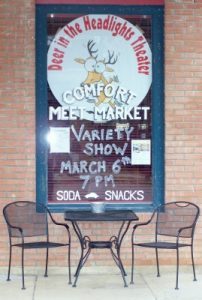
When in search of something to eat, we were directed to a converted garage, which now houses a bakery-café-bookstore-gifts-and-wine-tasting establishment; it's called High's - and the food was original and delicious. No ordinary fast-food this, but home-made soups, and sandwiches, home-made pita chips with hummus and crab-cake - the last of which was assembled tower-fashion, on a foundation of toasted bread. The tables in the café part of High's were scattered out among the shelves of books and artworks, or we could have eaten outside, on the deep verandah, and just watched the world go by.

March 11, 2010

Lone Unionist Monument South of Mason Dixon Line

True to the Union

There is a unique monument in Comfort, Texas - the only memorial dedicated to Unionists, south of the Mason-Dixon line, and one of only a handful of places where the 36-star American flag flies at half-staff, in perpetuity. Virginia split into two states, and Missouri and Kansas bled over the matter of secession and slavery - but who would ever have thought that right in the middle of a stoutly Confederate state, there would be a large population of stubborn Unionists? But there were, and what is odder still is that most those Union loyalists were only recent immigrants to Texas and the new world.

When Texas departed the Union, it was over the objections of a substantial minority, including those German settlers who had come to the Hill Country and built towns like Fredericksburg, Comfort and New Braunfels in the years immediately before the war. When a general conscription law was passed, essentially declaring that every white male between the age of eighteen and thirty-five were liable for military service, feelings in the Hill Country were bitterly resentful; opposed to slavery and secession, many found it deeply insulting to be forced to fight in the defense of an institution they despised, and for a political body whose existence they had opposed. And, too - Gillespie County was very much still a part of the frontier. Fighting off war-parties of Indians was a much more immediate concern.

This resulted in Gillespie and Kerr County being put under martial law, in the spring of 1862, and all men over the age of 16 ordered to register with the local provost marshal and take an oath of allegiance to the Confederacy. Suspicion followed by repression bred resentment and further defiance, which in turn bred violence... and resistance. Men of draft age took to hiding out in the brush. A company of Confederate partisans under the command of Captain James Duff were sent to keep order. By summer, Captain Duff ordered the arrest of any man who had not taken the loyalty oath. His troopers waged a savage campaign; flogging men they had arrested until they told his troopers what they wanted to hear, wrecking settler's homes, arresting whole families and confiscating foodstuffs and livestock.

Late in the fall, thinking that they had been offered a thirty-day amnesty by the Governor of Texas and the opportunity to depart Texas unmolested, rather than take the loyalty oath, a party of sixty men gathered together, led by a settler from Comfort named Fritz Tegener. They intended to travel westward towards the Mexican border; most intended to join the Union Army. But there was no such amnesty in effect, and they were pursued and fought a pitched and bloody battle with a contingent of Duff's troopers. About half the party was killed outright in the resulting fight, another twenty wounded were executed upon capture; one survivor was taken to San Antonio and executed there. The others scattered; some over the border and some to the Hill Country, where their families brought food to them as they hid in the fields near their homes. Captain Duff refused to allow the families of the dead to retrieve the bodies. Their remains lay unburied until 1866 when their families brought them to Comfort, and buried them in a mass grave, on a low hillside on what then would have been the outskirts of town. The stone obelisk is plain and stark, shaded by a massive oak tree: panels on three sides list the names of the 36 men of Tegener's party, all of whom were True to the Union.

March 3, 2010

Old Betsy a jade green 1952 Plymouth Station Wagon

Family Car

There is a saying that the difference between the English and the Americans is that to an American, a hundred years is a long time ago, and to an Englishman, a hundred miles is a great distance. Apt - and in a fair way to be true. All across the Southwest, our very oldest existing buildings, aside from various Indian pueblos, are the missions; at best a couple of centuries and change, pale and makeshift reflections of the great cathedrals of Spain.  A drive of a hundred miles is nothing special at all.

Growing up we spent a lot of time in the family car, my brother JP and sister Pippy and I, in the commodious back seat of  "Old Betsy" - a jade-green 1952 Plymouth Station wagon, which my Dad bought slightly used and which my mother drove for thirty years. Dad eventually bought, and dismembered another ‘52 Plymouth to keep the first in parts:  door panels, windows and engine parts and all, although the split windshield was inadvertently wrecked by our horse, blundering into the garage in search of his specialty horse-food, and stepping flat onto the glass panes.

Old Betsy got a new coat of paint every couple of years, and our best-remembered road trips was when Dad took us to Mexico, to get a new headliner installed at a cut-rate body and interior-work shop. While Betsy was being worked on, we watched a glass-blower demonstration, and looked at painted pottery and coarse hairy serapes and other touristy junk. We so wanted to go to a bullfight, the arena had the most interesting posters outside! In a bakery-grocery, Dad bought us fresh rolls, fruit, and bottled soft-drinks, nothing that would tax our delicate, first-world digestive systems. Our great adventure, the first time we had ever been to a foreign country. JP and Pippy and I could look around and think, "Not American." But not entirely foreign, not as long as we were looking at it from the back seat of Old Betsy.

How many weeks and months of my life were spent in the back seat of that car? Going to my grandparents' houses, to church, countless trips to school when the weather was bad, out to the desert or into the mountains with Dad for camping trips, to summer-camp in the mountains, to swimming lessons; how many weeks and months would that work out to be; JP and I on either side and Pippy in the middle, being the littlest, and least inconvenienced by the hump of the transmission in the middle of the floor? Looking out the window, daydreaming as the cityscape and the countryside swept by, seeing the hills upholstered in crunchy golden grass and spotted by dark green live oaks, watching for landmarks as the grey highway unspooled in front of us, the landmarks that let us know how close we were to wherever?

I was apt to get car-sick; the preventive was to have a window open and the fresh air blowing in, and to sing. We had a wide repertoire of folk songs, of hymns, of campfire songs, all sung in tight family harmony, and we would talk. So many things we talked about- the back of the Plymouth is where we first heard that we were going to have a baby brother, where Great-Aunt Nan talked about her half-brother, so many family moments. The back of the car, on the way to so many places - that's where family is, the place that memories are made.

Posted in Other
Feb. 24, 2010

When Getting There Was Glorious

When Getting There Was Glorious

Once there was a time - and that time is long out of memory for anyone alive in the United States today - when traveling on land was an arduous, uncomfortable business, and dependent upon muscle-power, either one's own muscles or those of draft animals. To go as far as fifty or five-hundred miles was a considerable project, well up to the mid-19th century - and then it seemed that the nation and the world itself were suddenly spanned by steel rails and steam engines. The railway had arrived - and a journey from the upper-Midwest to the West Coast, which once took six months of grueling travel, could be accomplished in comfort over a matter of days. Going by train became the way to go - and at the very high end, one could travel in considerable luxury, in a private parlor car. Even the ordinary traveler could feel like a person of consequence, walking through a railway station the likes of Grand Central Station in New York, or Paris' Gare de Lyon.

And burgeoning cities everywhere paid homage to the railway by constructing ever more magnificent temples to progress in the form of railway stations; combining comfort and efficiency with every possible technological advance - and no small display of architectural grandeur. Late 19th and early 20th century architects copied elements of everything from Roman baths, Greek Temples, Italianate towers and Moorish palaces. San Antonio's own Sunset Station was done in Spanish Mission Revival style; completed in 1902, it is an absolute period jewel, although combatively modest in size. It was the pride of San Antonio, when completed: along the upstairs galleries in the old Depot building there are pictures of a lavish banquet being held to celebrate it's completion - a banquet held to coincide with the arrival of the first train. For more than half a century, the Depot building was the waiting room and arrival hall for passengers departing and arriving. Presently it serves as a banquet hall again - and the current Amtrack station doesn't pack anything like the same glamorous and historical wallop of the grand old Depot.

The old station is the anchor of the slowly reviving historical St. Paul Square district, a cluster of various turn-of-the-last-century buildings which once housed a number of lively and vital businesses dependent upon rail transport and traffic - warehouses, hotels, grocery stores, cafes and the like. One senses that it might have revived a little sooner if the highway had not so brutally amputated that part of downtown from the rest of it. Still and all, it's a lovely place on a warm spring day, to explore the old neighborhood - and to marvel again at how elaborate a public facility like a railway station could be, in the days when the railway was the only way to go.

Posted in Other
Feb. 19, 2010

LegalZoom to Move Up To 600 Jobs to Austin

Gov. Perry Announces LegalZoom to Move Up To 600 Jobs to Austin

AUSTIN - Gov. Rick Perry today announced the state will invest $1 million through the Texas Enterprise Fund (TEF) in LegalZoom.com for the relocation of certain office functions from Los Angeles to Austin. This investment will create up to 600 jobs and more than $11.7 million in capital investment.

"Texas is the best state in the nation for business, thanks to our low taxes, reasonable and predictable regulatory environment, skilled workforce, and incentives such as the TEF, which continues to be an essential deal closing fund for Texas," Gov. Perry said. "This investment in LegalZoom will bring up to 600 jobs and millions of dollars in capital investment to Austin, and strengthen Central Texas' economy."

LegalZoom provides online legal document services including LLCs, incorporations, last wills, living trusts, trademarks, patents and copyrights. The Austin office will include sales positions, order fulfillment, customer service and technical support representatives. LegalZoom plans to begin hiring immediately, and become fully operational in the coming months.

"We're thrilled with the City Council's vote and are very excited to move forward with our Austin expansion plans. Since we started in 2000 we've been based solely in Los Angeles. So selecting our first location outside of Los Angeles was a very big decision for us, which we carefully considered for over 6 months," LegalZoom President and Chief Operating Officer Frank Monestere said. "We sincerely appreciate the efforts of Governor Perry, the Austin City Council and Chamber of Commerce in crafting a very attractive incentive package through both the Texas Enterprise Fund and the City's Economic Development Program. Their hard work and warm welcome were instrumental in our selecting Austin as our second home."

At Gov. Perry's request, the legislature created the TEF in 2003 and re-appropriated funding in 2005, 2007 and 2009 to help ensure the growth of Texas businesses and create more jobs throughout the state. TEF projects must be approved by the governor, lieutenant governor and speaker of the House. The fund has since become one of the state's most competitive tools to recruit and bolster business. To date, the TEF has invested more than $388.6 million and closed the deal on projects generating more than 55,580 new jobs and more than $14.3 billion in capital investment in the state.

For more information about the TEF, please visit http://www.texaswideopenforbusiness.com/financial-resources/texas-enterprise-fund.html or http://www.governor.state.tx.us.


Posted in San Antonio News
Feb. 19, 2010

When all you have in your yard is dandelions

When all you have in your yard is dandelions . . .

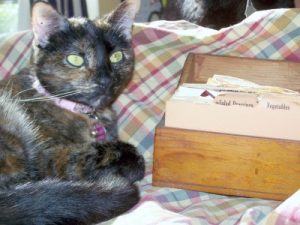
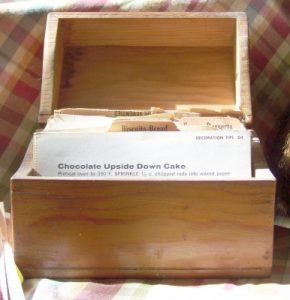
Then it's time to make dandelion wine. When my Granny Jessie passed on, in the early 1990's, one of the things that came to me was a little square wooden box full of recipe cards, although to be frank and fair, Granny Jessie probably did not use the recipes in it; some pre-printed on standard stock, cut out from magazines, others hand-copied in pencil, or merely cut from newspaper pages - and most of those are as brittle as ashes. No, I think she saved them because they intrigued her, or someone at a church pot-luck supper who brought something that she liked the taste of, scribbled it down for her, and she thought that she might make them someday. Some of the recipes cut from the newspaper have dates on them - from the 1970s mostly. Some of them, of course, may be older. But Granny Jessie wasn't that much of an adventurous cook - even before Grandpa Jim died; Grandpa Jim being one of those who thought salt and pepper was about as far out on the culinary edge of things as any human being ought to go. No, Granny Jessie did basic, early 20th century American cooking - which, when it was good, was very good. Her rice pudding (with raisins in it!) and her version of shoo-fly pie was sublime.
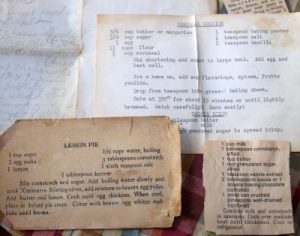
Among the adventurous curiosities in the little wooden recipe box was a newspaper clipping which so intrigued me that I copied out all the recipes therein - the topic was dandelions. Everyone knows what dandelions are, and people who are proud of their lawns spend a great deal of effort, expense and toxic chemicals eradicating them . . . and expense and effort which might not be necessary if we considered dandelions as a garden crop, instead. Yes, indeedy, the darned things are edible - at least when they are tender and young, and have not had any of the aforementioned chemicals poured upon them. Instead, what about a salad of dandelion greens - with bacon! Everything goes better with bacon! And what about dandelion wine?

Dandelion Green Salad

Fry until crisp - 3 slices bacon. Arrange in a flat, shallow dish, several cups of clean, dry dandelion greens, and crumble the bacon over it. Garnish with finely chopped chives and parsley. Dress with 2 TBsp vinegar and 1 TBsp olive oil, and a sprinkling of salt and pepper.

Dandelion Crowns

Trim leaves from whole plant, just where they turn green. Trim off root, just below crown, and clean thoroughly. Simmer for 5 minutes in water, then drain and simmer in fresh water another five minutes. Serve with a little melted butter and fresh pepper. Crowns may also be marinated for at least four hours in ½ cup olive oil, ¼ cup vinegar, 1 sliced garlic clove and a thinly sliced onion.

Dandelion Wine

Clean sepals from and wash thoroughly 6 cups dandelion blossoms. Place in a sterilized jar and cover with 3 quarts boiling water. Add rind from 2 lemons and 2 oranges, Cover mouth of jar with plastic wrap and allow to set for 2 days.

Strain liquid into another sterilized jar and stir in: 2 ½ pounds sugar, juice of 2 lemons and 2 oranges, ½ lb raisins, coarsely ground, and ½ package yeast. Cover and set away for one week. Strain into a gallon jug, adding additional water to fill, if necessary. Seal tightly and allow to ferment for 3 months. When it stops fermenting, pour into another jar and allow to stand until clarified. Bottle, and seal, and allow to age.

Posted in Other
Feb. 18, 2010

Statement by Gov. Perry Regarding Plane Crash in Austin

February 18, 2010

AUSTIN - Gov. Rick Perry today issued the following statement regarding the plane crash in Austin:

"In true Texas form, first responders and everyday citizens responded to today's plane crash with selfless acts of heroism, securing the area, evacuating the building and controlling the fire, and are to be commended. My office continues to communicate with local, state and federal officials on this incident, which is currently an open criminal investigation. With details still emerging, it is important to refrain from speculation and let the law enforcement experts determine what exactly unfolded."

Posted in San Antonio News
Feb. 17, 2010

Texas Economic Outlook Feb 12


Updated February 12, 2010

Economic Progress Report

(Change from previous year)

Unemployment Rate Increasing
Nonfarm Employment Decreasing
Sales Tax Collections, Retail Establishments Decreasing
Texas Leading Indicator Index ο Stable
U.S. Gasoline and Diesel Retail Prices Increasing

See all monthly time series graphs

Texas Economic Outlook

The Texas economy, the world's 12th-largest, continues to fare better than those of many other states. But Texas felt the effects of the worldwide recession during 2009.

According to the National Bureau of Economic Research, the U.S. economy peaked in December 2007 and entered recession. The Texas economy continued to grow through most of 2008, with employment peaking in October that year, then Texas joined the nation in losing jobs. During 2009, Texas' gross state product (GSP) declined more slowly than the U.S. economy (-1.7 percent versus -2.5 percent.)

Despite the state's economy contracting in 2009, Texas' relative economic advantage should continue as the state and U.S. economies turn around and expand again in 2010. Although job growth will continue to lag the renewed expansion of economic production, the Comptroller's office estimates that the Texas' GSP will grow by 2.6 percent during calendar 2010. The U.S. economy should grow at a slower rate of 2.0 percent during the year.

Jobs

  • Texas lost 23,900 jobs in December 2009, following two consecutive months of job gains totaling 73,000.
  • Texas' December 2009 unemployment rate was 8.3 percent, up from 8.0 percent in November. The January U.S. rate was 9.7 percent, down from 10.0 percent in December.
  • The U.S. lost 4.0 million jobs from January 2009 to January 2010.
  • The Texas unemployment rate has been at or below the national rate for 36 consecutive months.
  • In the 12 months ending in December 2009, Texas lost 275,900 jobs.

Housing

  • Thus far, Texas has weathered the national real estate crunch without significant damage to property values but sales and construction activity have slowed. Despite its continuing resiliency, Texas is not immune from the national real estate crunch.
  • 5,048 building permits for single-family homes were issued in December 2009. The number of permits in the 12 months ending in December 2009 was 63,595, a decrease of 15 percent from the period one year earlier.
  • Multi-family building permits are down, from 2,351 units in December 2008 to 993 units in December 2009. The number of permits issued in the 12 months ending in December 2009 was 16,541, a decrease of 66 percent from the period one year earlier.
  • In December, sales of existing single-family homes in Texas rose year over year for the fourth month since early 2007.
  • In Texas, the median price for existing single-family homes increased by 3.6 percent from December 2008 to December 2009.
  • The Texas foreclosure rate has remained largely stable for the past three years. Texas experienced 12,225 foreclosure filings in January 2010.
  • In January 2010, the Texas foreclosure rate was one in every 785 mortgages. This was substantially better than Nevada's one in 95, Arizona's one in 129 and both Florida and California at one in 187.

Consumer Confidence Index

  • Consumer confidence has rebounded by 50 percent nationwide, but still remains pessimistic at a level of 55.9, which is more than 44 percent below its 1985 baseline level. Texas and surrounding states fared better than the rest of the nation. Texas' regional index rose to 71.9, 9.4 percent higher than January 2009.

Oil and Natural Gas

  • The all-time high crude oil closing price was $145.29 on July 3, 2008.
  • Crude oil futures closed at $75.28 per barrel on February 11, 2010, more than double the level of one year ago. Last winter's lowest price was $33.98 in February.
  • In fiscal 2008, production tax collections for natural gas were up 42 percent over fiscal 2007. Tax collections for oil were up 72 percent.
  • By contrast, in fiscal 2009 production tax collections for natural gas were down 48 percent over fiscal 2008. Tax collections for oil were down 39 percent.
  • Natural gas and oil production tax collections are significantly lower for the first five months of fiscal year 2010 over fiscal year 2009.

Taxes

  • Texas sales tax receipts for January 2010 were down 14.2 percent from January 2009.
  • For fiscal 2009, state sales tax receipts are down 2.7 percent from fiscal 2008.
  • Motor vehicle sales tax collections for fiscal 2009 were $2.569 billion, down 22.5 percent over fiscal 2008 amount.
  • The nationwide core transaction price for a new car or truck during the first 15 days of January 2010 rose 2.73 percent to $25,631 from $24,949 in January 2009.
  • For the first 15 days of January 2010, total national industry auto sales were 568,965 units, up 32.3 percent compared to first 15 days of January 2009.
  • Nationally, the lease share of new vehicle purchases increased to 24.0 percent of new vehicle purchases; that's 8.0 percent higher than in January 2009.

Stimulus Package

  • In Texas, an estimated $18 billion in federal stimulus money is flowing to state and local governments. The Comptroller's office is tracking the $14.3 billion that comes through the state Treasury. The Comptroller's analysis is ongoing. For the latest information, visit our ARRA Web site, A Texas Eye on the Dollars.

Cap and Trade

  • Efforts to reduce greenhouse gas emissions could negatively impact the Texas economy. The state could see 173,000 to 425,000 fewer jobs than expected in 2030 as a result of increased energy prices from the cap and trade portion of the recently proposed bill. The resulting decline in gross state product is estimated to be between $25 billion and $58 billion.
  • The Comptroller's office is continuing to analyze potential implications and assess how green jobs and energy efficiency programs in the proposals could offset negative impacts. For the latest information, visit our Cap and Trade Web page.
Posted in Market Updates
Feb. 16, 2010

Facing Foreclosure Know the facts and protect your rights

FACING FORECLOSURE?
KNOW THE FACTS AND PROTECT YOUR RIGHTS

COLLEGE STATION (Real Estate Center) - Texas is experiencing its highest residential foreclosure rate since the late '80s. All residential foreclosures are governed by strict statutory rules, and Real Estate Center attorney Judon Fambrough says homeowners in jeopardy should know these rules to protect their rights.

"For example, how many days' notice must the homeowner be given to satisfy the amount in arrears before the entire amount of the unpaid loan may be declared due and owing?" Likewise, Fambrough said, "What are the qualifications, if any, of the person who conducts the foreclosure sale? How many times a year can a foreclosure sale occur, and on which day of the week, and during what hours?"

These and other questions are answered in "A Homeowner's Rights under Foreclosure," available on the Center's website.

Posted in Real Estate